


Coal Mining Lawyers
Specialist lawyers for injured coal miners across NSW. 40+ years acting for the mining community. No Win, No Fee.
NSW-wide, with local offices.
40+ Years of Winning Cases and a 99% Success Rate.
A free, no‑obligation first conversation.
Injured in or around a coal mine? Know your rights
If you have been hurt working underground, at an open cut mine or at the pit top, you may be entitled to compensation, and the rules are not the same as for other NSW workers. Coal mining injury claims are generally handled through the NSW coal miners’ insurance scheme, Coal Mines Insurance, and coal miners have rights that most other workers do not.
Whitelaw McDonald has acted for injured coal miners for more than 40 years. Leading our coal mining specialists is Stuart Barnett, one of NSW’s most experienced lawyers in coal mine compensation law, having dedicated over 35 years to representing injured coal miners.
Act early
Time limits apply for compensation claims. Our experienced team can explain what a coal mining compensation claim may involve, who it is made against and what to do first, in a free and confidential conversation with no obligation.
Specialist coal mining injury representation
Mining injury claims are distinct from general workers compensation claims and fall under their own separate act. These cases carry their own rules, risk factors, and industry-specific schemes on top of the general workers compensation framework. With 45 years’ in law, Whitelaw McDonald’s Stuart Barnett is one of the most experienced lawyers in coal mine compensation law in NSW and has spent decades specifically in this space – including underground and open cut claims, dust disease exposure, and hearing loss claims common in mining roles. Similarly, senior associate Laura Barnett has over a decade in personal injury law predominantly in the coal mine space, regularly appearing before the District Court and also appearing in the Supreme Court in coal mine common law and third party common law claims.
If you or a family member works in the mining industry, read more about our coal mining injury claims here.


Mining and Energy Union (MEU) members partnership
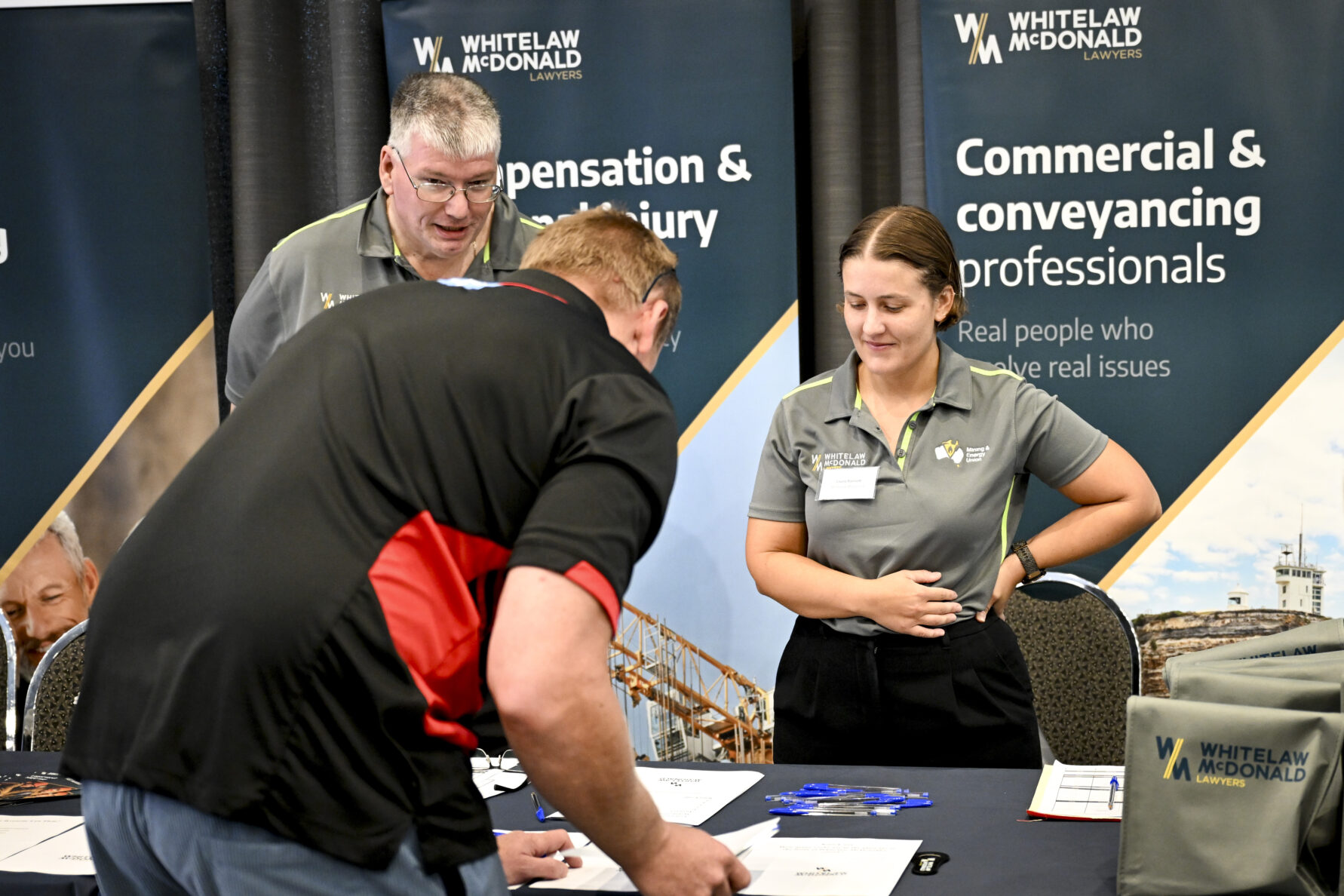
Whitelaw McDonald is proud of its ongoing partnership with the mining community and the Mining and Energy Union. MEU members receive free legal advice on matters from workers compensation to vehicle accident claims, free standard wills for the member and their spouse, and 25% off other legal services, such as conveyancing and powers of attorney.
Case Study: Wear & Tear
Six-Figure Lump Sum for Retired Coal Miner’s 39-Year “Wear and Tear” Injuries
Whitelaw McDonald Lawyers successfully secured a six-figure, tax-free lump sum for a coal miner with 39 years of underground experience, despite the fact that he had already retired normally at the time the claim was made. The claim was brought against Coal Mines Insurance (CMI) on the basis that decades of physically demanding underground work caused cumulative musculoskeletal injuries across his neck, back, shoulders, joints, and limbs. The matter was resolved without proceeding to a full contested hearing.
How It Works
What happens when you contact us:
1
Get in touch
Fill out a form, call our office or fill out our free claim check – it takes a few minutes and there’s no cost or obligation.
2
Talk to a local lawyer
We’ll arrange an obligation-free consultation with one of our compensation lawyers to understand your situation and explain your options clearly.
3
We handle the rest
If you decide to proceed, your lawyer will manage your claim from start to finish – dealing with insurers, gathering evidence, and fighting for the compensation you deserve.
Injuries and illnesses we claim for
Coal mining injuries range from sudden accidents to conditions that build up over years of work. We can assist with claims involving:
- Machinery and crush injuries, including injuries from heavy plant and vehicles
- Falls, slips and trips, including in poorly lit or wet underground areas
- Back, neck, shoulder and knee injuries from lifting, repetitive work and awkward postures
- Mine collapse, roof fall, explosion and gas incidents
- Wear and tear, such as physically demanding underground work causing cumulative musculoskeletal injuries
- Dust disease, including black lung (coal workers’ pneumoconiosis) and silicosis
- Noise-induced hearing loss, also called industrial deafness
- Psychological injury, including PTSD after a serious incident
Many miners wait because the injury built up gradually or they have already left the industry, but a gradual injury or an older condition is still worth getting legal advice for.
What can you claim?
Coal miners are classed as exempt workers under NSW workers compensation law, which generally means the 2012 amendments that limit weekly payments and medical expenses for most other workers do not apply to them.
Employee rights in the mining industry in the case of an accident usually fall into 2 types of claim:
Category 1 – Workers Compensation
You may claim workers compensation through the coal miners insurance scheme in NSW if you suffer an injury at work or while commuting i.e
- weekly payments of compensation usually to 1 year after you are eligible for the Aged Pension. In some cases you are entitled to this for the rest of your life
- medical and treatment expenses for the rest of your life
- lump sum payments for loss of use or of efficient use of body parts. You may be entitled to more than one claim if the injury becomes worse
- lump sum payments for pain and suffering. You may be entitled to more than one claim if this increases over time.
Category 2 – Common law claims
In the case your employer was negligent, you may be able to sue for damages through a common law claim. This is separate from your compensation entitlements and may cover:
- past economic loss and future loss of earning capacity
- pain and suffering
- past and future medical and treatment costs
- domestic care and assistance, including care provided by family
To succeed, you generally need to show that your employer, or another responsible party such as the mine operator, was negligent and that this caused your injury. Mine operators have significant safety duties under the Work Health and Safety (Mines and Petroleum Sites) Act 2013 (NSW), and a failure to meet them may support a negligence claim. Because these claims require proof of negligence, get advice before you proceed.
We work with mining engineers where needed to understand how an accident happened.

What will it cost?
Your first conversation with us is free and without obligation. We act on a No Win, No Fee basis.
Get Free Advice
At Whitelaw McDonald, we believe everyone deserves to know where they stand. Have a quick confidential, no-obligation chat with our legal team at no cost.
There is no payment or commitment needed to speak with our experts.

Case Study:
Successful Workers Compensation Claim for Coal Miner’s Brain Injury
Whitelaw McDonald Lawyers successfully secured ongoing weekly workers compensation payments for a coal miner who sustained a permanent brain injury in a motorcycle accident on the way to work. The claim was made as a journey claim under section 10 of the Workers Compensation Act 1987 (NSW) against Coal Mines Insurance, the specialised insurer for NSW coal industry workers. Despite the insurer’s initial resistance, the matter was ultimately settled on favourable terms. The settlement entitles our client to weekly compensation payments until age 68, supplementing his income from lighter duties in non-coal mining work.
Who can make a coal mining compensation claim?
You do not have to work directly for the mine operator. The rules generally apply to people injured while working in or about a mine, so they may cover:
- employees of the mine operator
- contractors and labour hire workers on site
- tradespeople, drivers and other workers who attend a mine for a job
- workers injured travelling to or from work, in some circumstances
If you are a contractor or labour hire worker injured at a mine, you may be able to claim workers compensation through your direct employer’s insurer. In some circumstances you may also have a separate claim against the mine operator, which has safety duties toward everyone on site, not only its own employees, under the Work Health and Safety (Mines and Petroleum Sites) Act 2013 (NSW).
Injured on the way to or from the mine? A journey to or from work may be covered in some circumstances, generally where there is a real and substantial connection between your employment and the accident. If you were hurt in a road accident, a separate compulsory third party (CTP) claim may also be possible. Strict time limits apply, so get advice early.
Frequently Asked Questions
What can I claim after a coal mining injury in NSW
Depending on your circumstances, you may be able to claim weekly payments, medical and treatment expenses, and lump sums for permanent impairment and for pain and suffering. If your employer was negligent, a common law claim may also be possible. We can assess which apply to you.
How is a coal mining compensation claim different from an ordinary workers compensation claim?
Coal miners are classed as exempt workers under NSW workers compensation law, which generally means the 2012 amendments that limit weekly payments and medical expenses for most other workers do not apply to them. Most NSW coal mining employers must also insure through Coal Mines Insurance rather than a standard commercial insurer. We can explain how this applies to you.
Do the 2026 NSW workers compensation reforms affect coal miners?
Most of the 2026 changes are limited for coal miners, but some may affect how claims are handled. We can explain what applies to your situation.
Who counts as a coal miner? Can contractors and labour hire workers claim?
Often, yes. The rules generally apply to people injured while working in or about a mine, not only direct employees. Contractors and labour hire workers may be able to claim workers compensation through their direct employer’s insurer and, in some circumstances, may also have a separate claim against the mine operator if its negligence contributed to the injury. Tell us where and how you were working and we will advise.
Can I claim for a gradual injury or a dust disease like black lung, years after leaving the mines?
Possibly. Conditions such as dust disease and hearing loss can develop over many years. For some claims, such as claims against a third party, the time limit generally runs from when the claim becomes “discoverable”, meaning when you knew or ought to have known about the injury, that someone’s fault caused it, and that it was serious enough to justify a claim. This is very fact-specific, so speak to us as soon as you have a diagnosis or symptoms. See also our dust disease and industrial deafness pages.
What is a common law claim and how is it different from workers compensation?
A common law claim is a negligence claim made separately from the workers compensation scheme. It generally requires proof that your employer or the mine operator was negligent. If successful, it may cover pain and suffering, past and future economic loss, medical expenses and domestic assistance.
What medical and travel costs can a coal miner claim?
Depending on your injury, costs can include ambulance, hospital, GP and specialist care, medication, allied health treatment from approved providers, home and vehicle modifications, domestic assistance and reasonable travel to appointments. Keep your Certificate of Capacity current and keep your receipts. For major treatment such as surgery, it is generally wise to seek insurer approval first. Read more.
Is there a time limit for a coal mining compensation claim?
Yes, time limits generally apply and they differ between types of claim. A common law claim against your employer generally must be started in court within three years of the accident. Claims against a third party, such as a mine operator, generally have a three-year period from when the claim becomes discoverable, with a 12-year outer limit that a court can extend only in certain circumstances. If time has passed, you may still be able to ask a court for permission to proceed, but approval is not guaranteed. The safest approach is to treat the date of the accident as the starting point and get advice early.
How much does it cost to hire a coal mining injury lawyer?
Your first conversation is free with no obligation, and we act on a No Win, No Fee basis (conditions apply, ask us for details).
What can I do if Coal Mines Insurance denies or stops my claim?
A denial or a stop in payments is not always the end. We can review the decision and advise on challenging it. Keep your medical certificates and correspondence, and call us promptly.
Can I claim if I was injured travelling to or from the mine?
In some circumstances, yes. A journey to or from work may be covered where there is a real and substantial connection between your employment and the accident, and the journey is generally treated as starting at the boundary of your home’s land. A significant detour, a substantial break in the journey, or serious fault such as intoxication can defeat a claim. If you were hurt in a road accident, you may also have a compulsory third party (CTP) claim. Generally you should notify the CTP insurer within 28 days to preserve income benefits from the date of the accident, and lodge the claim within three months. Read more.