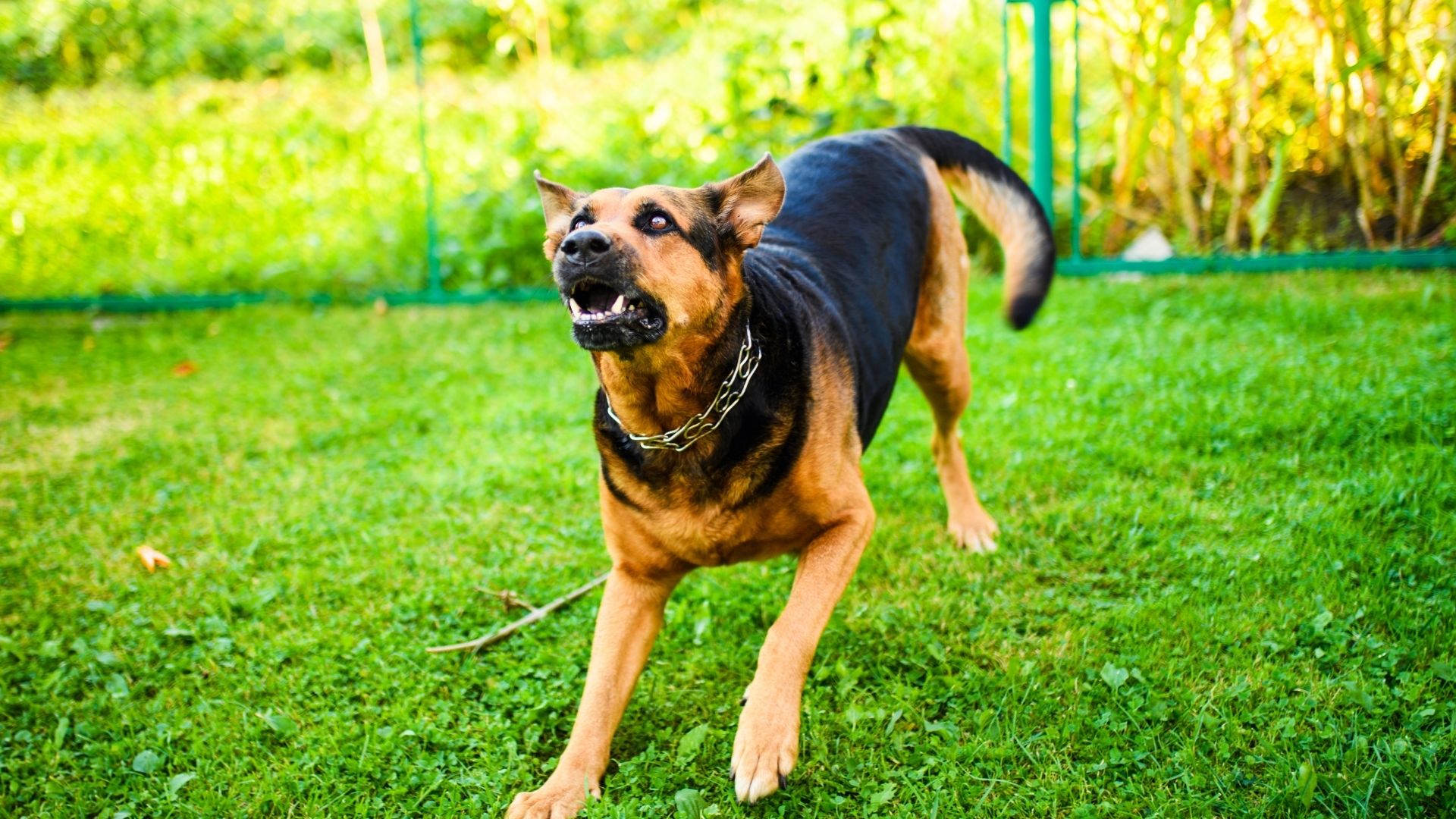
If you’ve been bitten or attacked by a dog in NSW, you may be entitled to compensation. Dog owners are generally held responsible for the harm their dog causes, however, your claim will generally not be against them personally but rather against their home insurance (even if the attack did not take place at their home).
Dog bite compensation is an often misunderstood area of law, but our specialists have demonstrable success in ensuring victims achieve fair compensation for their physical and psychological injuries after animal attacks.
At Whitelaw McDonald, our dog bite compensation lawyers can help you understand where you stand, explain what a claim generally involves, and guide you through the process from your first conversation with us. We act on a No Win, No Fee basis,* and your first conversation with us is free and comes with no obligation.
What counts as a dog attack?
A dog attack claim isn’t limited to bites. Under NSW law, a “dog attack” is defined broadly, and generally includes a dog that:
Bites, rushes at, chases, or harasses a person
Knocks someone over, or causes them to fall or be injured while trying to get away
Attacks or injures another animal in a way that causes the person present psychological harm
This means you may still have a valid dog attack compensation claim even if you weren’t bitten – for example, if a dog knocked you down while running at you.
Dog bite and animal attack claims fall within our personal injury practice – the same area that covers other injuries caused by someone else’s negligence in a public or private place.
Who is responsible for a dog attack?
The dog’s owner. In NSW, dog owners are generally held responsible for injury, loss or damage caused by their dog pursuant to the companion animals act 1998, largely regardless of whether the dog has shown aggressive behaviour in the past. The compensation claim will generally be put against the dog owner’s home and contents insurance, not their personal property. This includes if the attack occurred in a public setting because home and contents insurance typically includes public liability cover. You shouldn’t be concerned to seek compensation for your harm or suffering if the pet belonged to a family member or friend, as the damages would not be incurred by them directly if they have insurance.
The Companion Animals Act imposes strict liability on the owner, which can make dog attack claims more straightforward to establish than many other public liability claims.
Other parties can sometimes share responsibility, too, depending on the circumstances, including:
A landlord who knew (or should have known) about a dangerous dog on their rental property and failed to act
A business or occupier – for example, a café, shop, or venue that allows dogs on the premises and fails to take reasonable precautions
Every case is different, and working out exactly who is responsible – and how much they’re likely to be liable for – is something we assess as part of your free first conversation with us.
Our Principal Director Matthew Berenger Has Special Interest in Public Liability Cases Like Animal Attacks
Career highlights include representing a client who sustained a severe injury in a shopping centre, fighting and winning the case in the High Court of Australia. Won in 2012, this case continues to be used as a precedent for public liability cases today.
Depending on your circumstances and the severity of your injuries, a dog bite or animal attack claim may allow you to recover compensation for things like:
Pain and suffering
Past and future medical and treatment expenses
Past and future loss of income and earning capacity
Loss of superannuation contributions linked to that lost income
Damage to clothing or personal belongings
Legal costs
We don’t publish compensation estimates or figures on this page, because outcomes depend entirely on your individual circumstances – the nature and severity of your injuries, how they’ve affected your life and work, and the specific facts of the attack. We highly recommend a quick conversation with one of our lawyers to get a proper sense of what may be achievable in your case.
Physical and psychological injuries are both covered
Dog attacks can cause a wide range of injuries, and a claim can generally cover both the physical and psychological impact of what happened, including:
Puncture wounds, lacerations and scarring
Fractures or nerve damage, particularly where a fall was involved
Infections requiring ongoing treatment
Psychological trauma, including anxiety, PTSD, or a lasting fear of dogs
Children can be particularly vulnerable to facial injuries and to psychological effects that last well beyond the physical recovery. If your child was bitten or attacked, we can talk you through what a claim on their behalf generally involves.
What if the dog owner is uninsured or can’t be found?
Most dog owners are covered for this kind of incident under their home and contents insurance, which typically includes public liability cover. However, there may be instances where the dog owner is not insured.
If the owner has no insurance, they generally remain personally responsible for paying compensation.
If the dog or owner cannot be identified, a claim generally cannot proceed, because there’s no one to bring the claim against.
Get in touch today
You don’t need to have all the answers before you call us. Whether you’re not sure if you have a claim, you’re partway through a claim already and want a second opinion, or your claim has been disputed, get in touch for a free, no-obligation conversation.
What to do after a dog attack
The steps you take in the hours and days afterwards can matter for your recovery and for your claim. Generally, it helps to:
Seek medical attention, even for what seems like a minor bite – dog bites carry a real risk of infection, and a medical record of your injuries is important evidence.
Report the attack to your local council and, for more serious incidents, to NSW Police.
Photograph your injuries, the location, and anything relevant like torn clothing or damaged property. Repeat this over the following days as bruising or wounds develop.
Get the owner’s details if you can do so safely, or note a description of the dog and where it was if the owner is unknown.
Get witness details from anyone who saw what happened.
Keep records of your symptoms, time off work, medical costs, and how the incident has affected your daily life.
Talk to a lawyer as soon as you reasonably can – evidence like witness memory and CCTV can be lost quickly.
Time limits for dog bite compensation claims
In NSW, you generally have 3 years to start court proceedings for a dog bite or animal attack claim, running from the date the claim becomes “discoverable” – generally the date you knew, or reasonably ought to have known, that you were injured, that the injury was caused by someone else’s fault, and that you knew you had a cause of action. For abundant caution we recommend you treat the date of the attack as the date the time limit commences as it is the earliest date from which the time limit can commence.
There’s also an absolute outer limit of generally 12 years from the date of the attack, regardless of when the injury became discoverable.
No Win, No Fee
We act on a No Win, No Fee basis* for dog bite and animal attack compensation claims. Your first conversation with us is free and comes with no obligation. We’ll listen to what happened, explain your options, and let you decide where to go from there.
*Conditions apply. Ask us for details specific to your situation.
Why choose Whitelaw McDonald
Proven success in dog bite cases
Working out how home and contents insurance interacts with a public liability claim is easy to get wrong, and getting it wrong can cost you compensation you’re entitled to. Our lawyers have a proven track record with real client success outcomes regarding dog attacks.
Proven experience in public liability law
Our Principal Director, Matthew Berenger, won a landmark public liability case in the High Court of Australia in 2012 – a case that’s still used as precedent today.
We take the time to understand your situation
Every dog attack is different, and so is every claim.
No Win, No Fee*
With a free, no-obligation first conversation.
This page is general information only and does not constitute legal advice. Compensation entitlements depend on individual circumstances. Contact Whitelaw McDonald for a free, no-obligation assessment of your specific situation.
It depends entirely on your individual circumstances – the severity of your injuries, how they’ve affected your work and daily life, and the specific facts of the attack. We don’t publish compensation figures or “typical payout” ranges, because they can be misleading; we can talk through what your situation might mean for a claim during your free first conversation with us.
If the house where the dog is normally kept has Home and Contents insurance, it will normally extend to cover dogs. However, if the owner is uninsured, they generally remain personally liable. If the dog or its owner can’t be identified, a claim generally can’t proceed, because there’s no one to bring it against.
In some circumstances, yes. A landlord or a business or occupier may share responsibility depending on what they knew and any potential negligence arising from that knowledge. This depends heavily on the specific facts, so it’s worth discussing your situation with us directly.
In most cases, compensation is paid by the owner’s home and contents insurer, not out of the owner’s own pocket. This means many people in this situation are able to pursue a claim without it becoming a personal issue between them and the owner.
You’re not required to have a lawyer, but dog bite claims can involve working out liability, insurance, and evidence that can be difficult to navigate on your own – particularly while you’re recovering. A free, no-obligation conversation with us can help you understand what’s involved before you decide.
As a parent or guardian, you can generally make a claim on your child’s behalf. Children can be particularly vulnerable to both physical and psychological effects of a dog attack.
Being partly at fault doesn’t necessarily rule out a claim in NSW. It may instead affect the amount of compensation payable. Whether this applies, and to what extent, depends on the specific circumstances of the attack.
We act on a No Win, No Fee* basis, and your first conversation with us is free and comes with no obligation. We’ll explain how our fee arrangement works for your specific situation before you need to make any decisions.
Get in touch
Send us a few details and we'll be in touch shortly.
One of our team will be in touch shortly. If it's urgent, call us on 02 4941 8999.
Manage Cookie Consent
To provide the best experiences, we use technologies like cookies to store and/or access device information. Consenting to these technologies will allow us to process data such as browsing behavior or unique IDs on this site. Not consenting or withdrawing consent, may adversely affect certain features and functions.
Functional
Always active
The technical storage or access is strictly necessary for the legitimate purpose of enabling the use of a specific service explicitly requested by the subscriber or user, or for the sole purpose of carrying out the transmission of a communication over an electronic communications network.
Preferences
The technical storage or access is necessary for the legitimate purpose of storing preferences that are not requested by the subscriber or user.
Statistics
The technical storage or access that is used exclusively for statistical purposes.The technical storage or access that is used exclusively for anonymous statistical purposes. Without a subpoena, voluntary compliance on the part of your Internet Service Provider, or additional records from a third party, information stored or retrieved for this purpose alone cannot usually be used to identify you.
Marketing
The technical storage or access is required to create user profiles to send advertising, or to track the user on a website or across several websites for similar marketing purposes.